Not every chimney requires a complete rebuild — and in many cases, a full rebuild would be a waste of money. Crumbling mortar, a cracked crown, spalling brick, failed flashing, a missing cap: these are all real problems, but they're also fixable ones. Throwing out a structurally sound chimney because the surface work has deteriorated doesn't make sense.
Now, if your chimney has every one of those problems and it's also leaning — almost completely off-plumb — then yes, a rebuild is likely the right call. But that's the exception, not the rule. Assessing the problem first is the most important step to not overspending. If only a portion of your chimney needs work, we'll tell you that and fix what actually needs fixing.
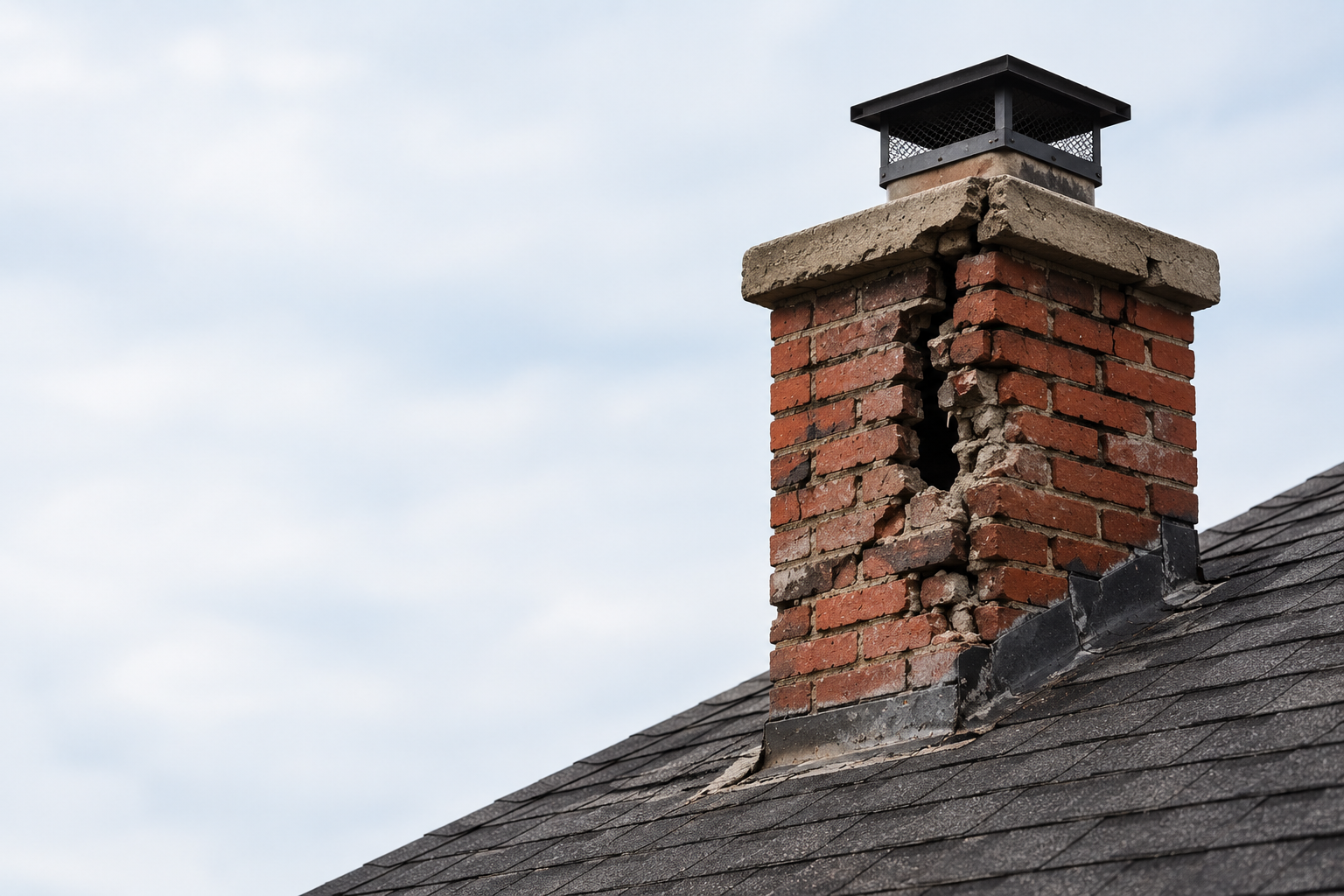
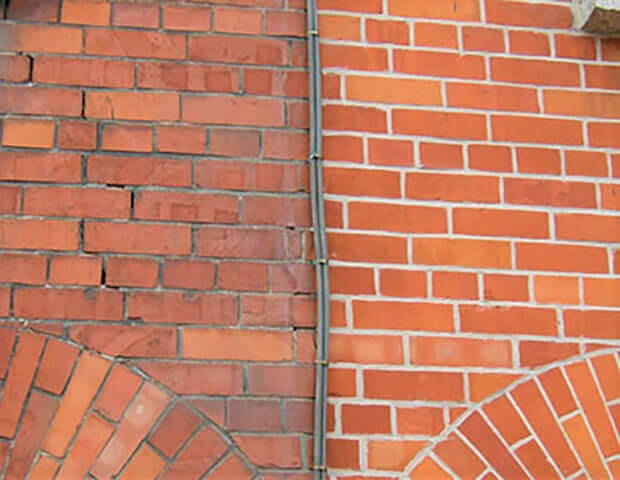
The mortar joints of your chimney are the first line of defense — valiantly guarding your chimney's stability against water, ice, and everything Maryland weather throws at it. If you're seeing moss growth or visible cracks in the joints, it's probably time for a repoint. And here's the thing: most of the other problems on this page will never appear as long as the masonry work is properly maintained.
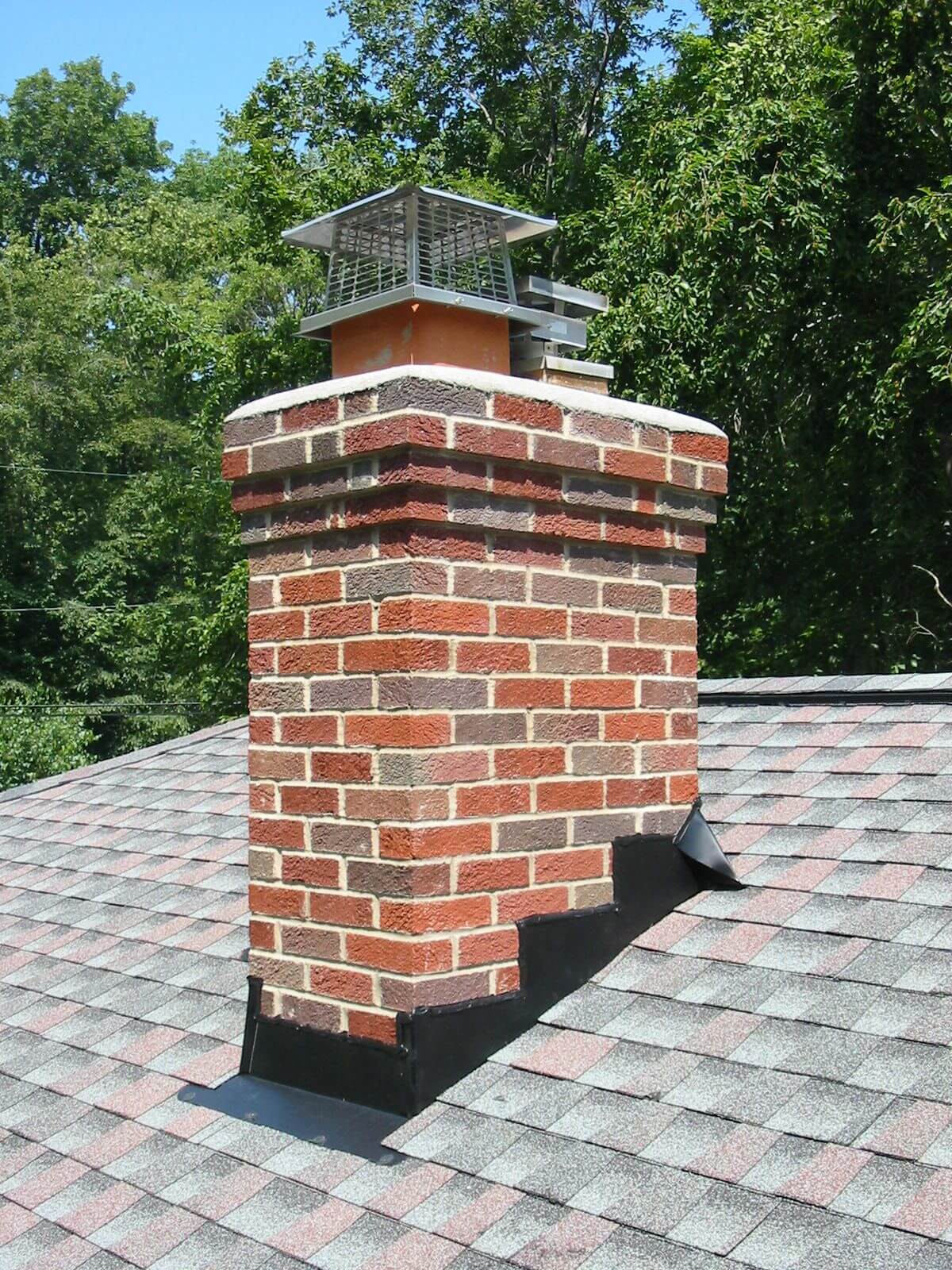
Chimney repointing means removing the deteriorated mortar to the proper depth and packing in new mortar that matches the hardness of the original brick. We also replace individual spalled or missing brick when needed. Done right, repointing restores the chimney's weather resistance without disturbing sound brick — and it's far less expensive than letting water damage accumulate until a rebuild is the only option.
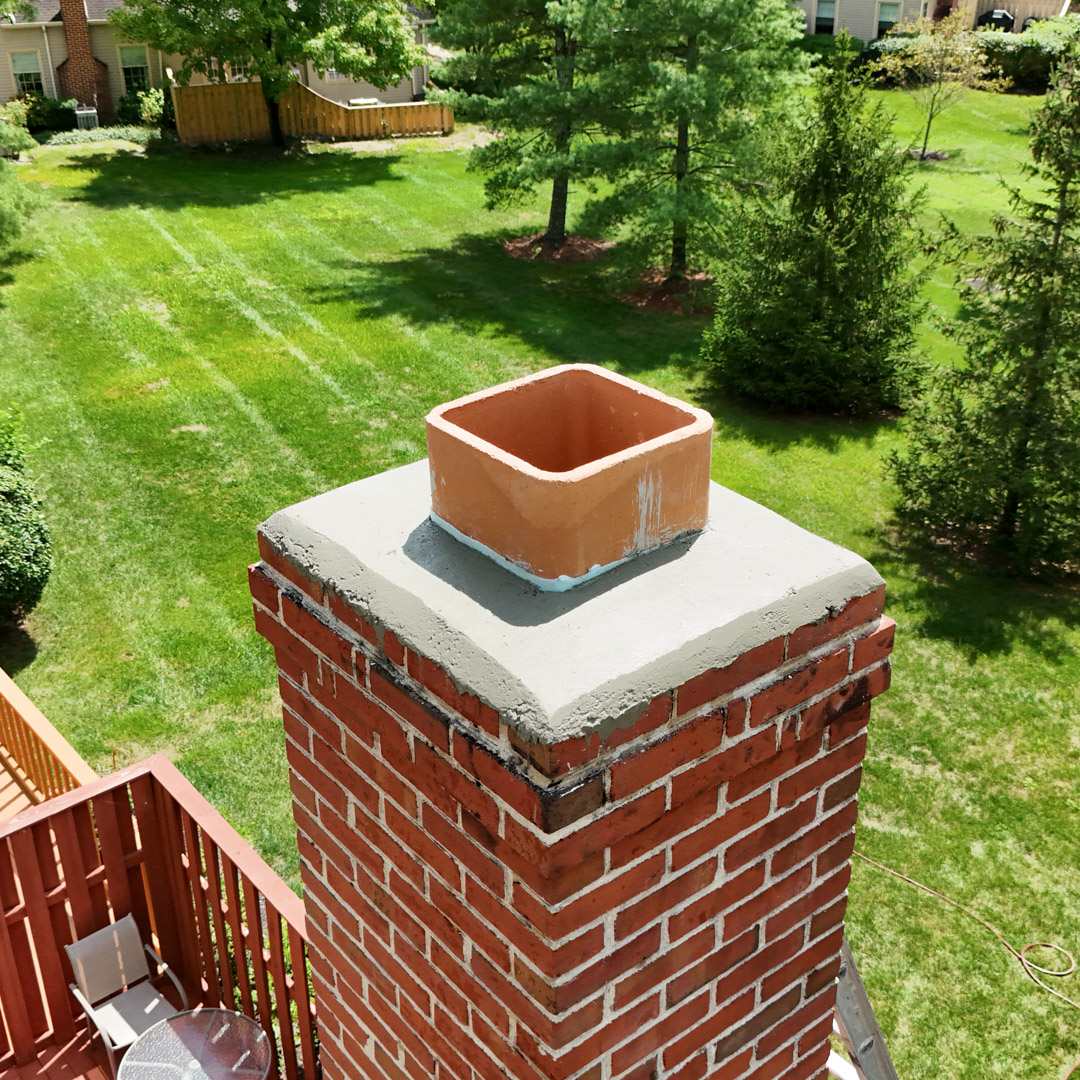
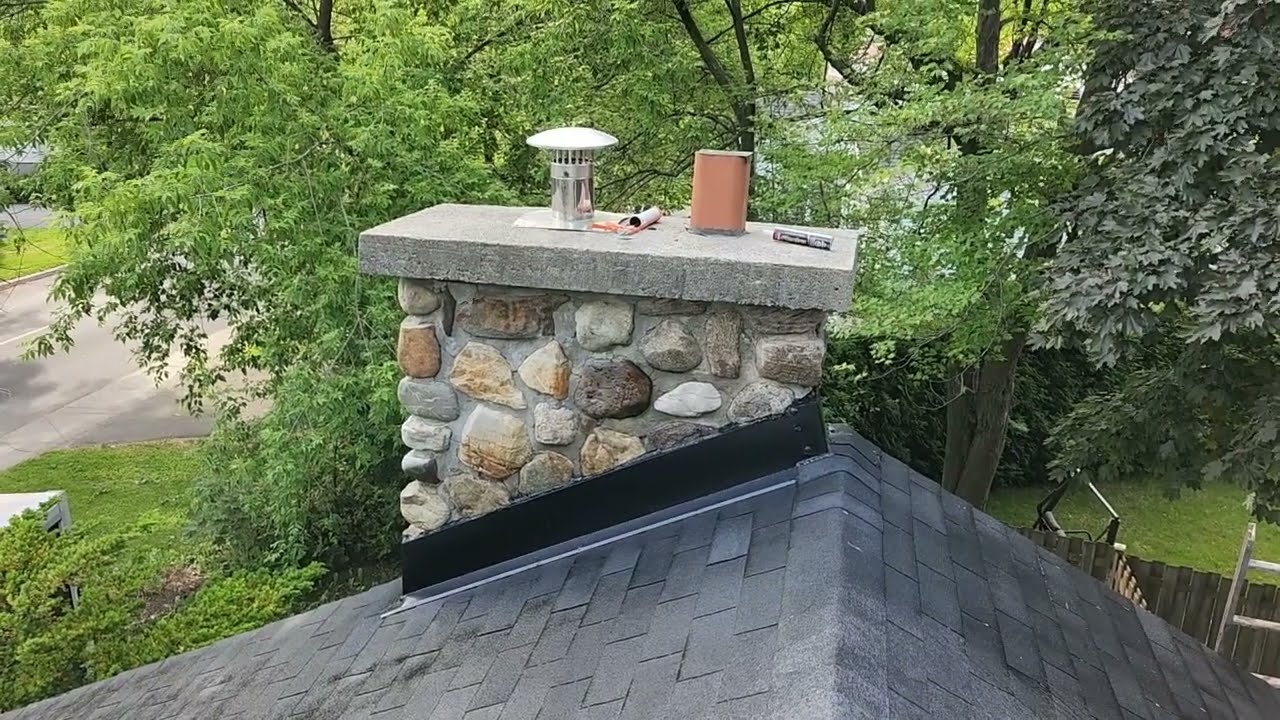
The chimney crown is the concrete slab that sits at the very top of the chimney, covering the masonry and leaving only the flue opening exposed. Its job is to shed water away from the chimney structure. When it cracks — which it eventually does, because concrete and brick expand and contract at different rates — water works its way down through the joints and into the chimney interior.
A failing crown is one of the most common sources of chimney water damage we see in the Baltimore area, and it's also one of the most preventable. Small cracks can be filled and sealed. Crowns that have heaved, crumbled, or broken apart need to come off and be rebuilt correctly — with the right overhang and slope so water runs off cleanly. We've rebuilt plenty of crowns that were originally poured too flat or too thin to last.
Flashing is the sheet metal that seals the joint where your chimney meets the roof. It's the most common source of chimney leaks — not the crown, not the mortar, but the flashing. The metal expands and contracts with temperature, caulk fails over time, and step flashing that was installed poorly from the start can let water in for years before anyone notices.
We rebed counter-flashing into the mortar joints and install or replace step flashing along the roofline. When the existing flashing is beyond patching, we replace it entirely. If water is getting into your house near the chimney and your roofer hasn't found the source, there's a good chance the flashing is where to look.
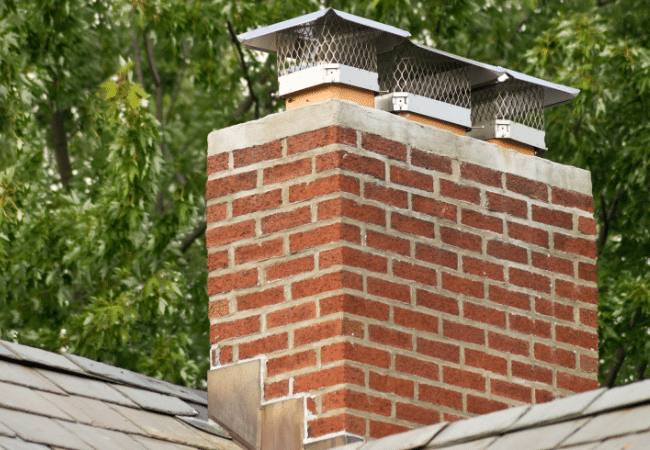
A chimney cap sits directly over the flue opening and is the simplest, most cost-effective protection a chimney can have. It keeps rain out of the flue, blocks animals from nesting inside, and stops debris from collecting at the bottom. Many older chimneys in the Baltimore area were never fitted with one, and the ones that were often have caps that have rusted through or blown off entirely.
We install quality stainless steel caps sized to fit the flue properly — not the cheapest galvanized option that rusts in a few winters. On any chimney repair job we do, we check the cap as a matter of course. If it's missing or failing, we'll let you know. It's a small thing that prevents a lot of problems from getting started.
Common questions about chimney repair in the Baltimore area. Still have more — just call or send us a message.
Common signs include crumbling or missing mortar, spalling brick, white staining (efflorescence) on the exterior, water in the firebox, or a leaning chimney. If you see any of these, call us — the longer it goes, the more it costs to fix.
The chimney crown is the concrete cap that covers the top of the chimney, leaving only the flue opening exposed. It's the primary defense against water getting into the chimney structure. A cracked or deteriorated crown is one of the most common causes of water damage inside chimneys.
Yes — brick, stone, and block chimneys on single-family homes, townhouses, and rowhouses throughout Baltimore County and surrounding areas.
It depends heavily on what needs to be done. Repointing a chimney is much less expensive than replacing damaged brick or rebuilding a section. We come out, assess the damage, and give you a free written estimate before any work begins.
Fill out the form and we'll get back to you as soon as possible. No pressure, no obligation — just a real conversation about your chimney repair project.